


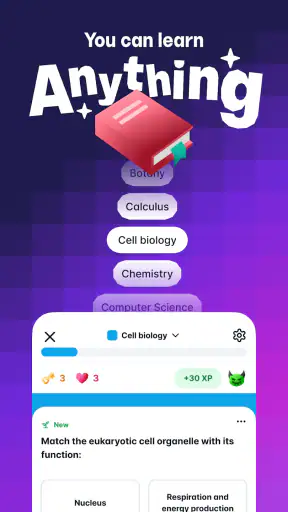
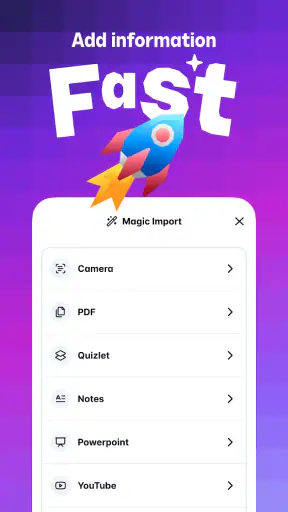
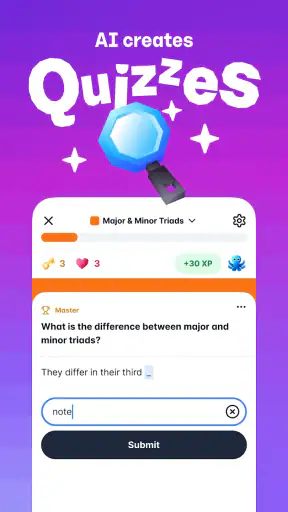
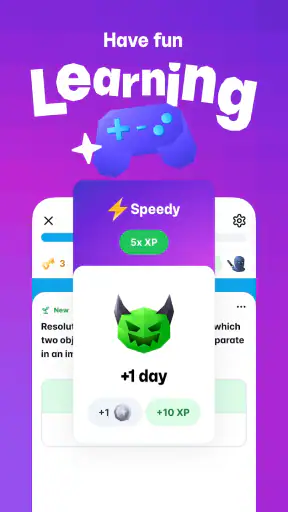
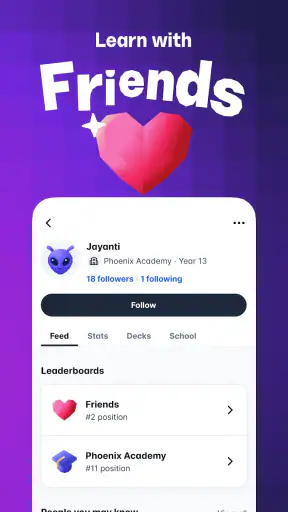
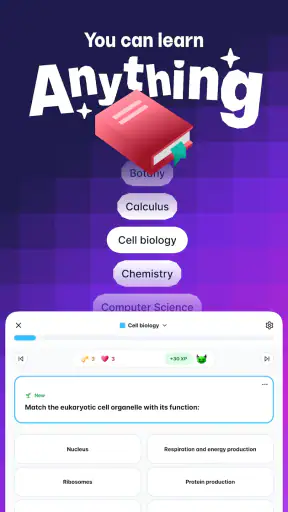
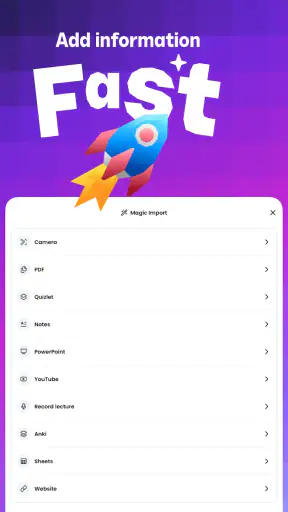
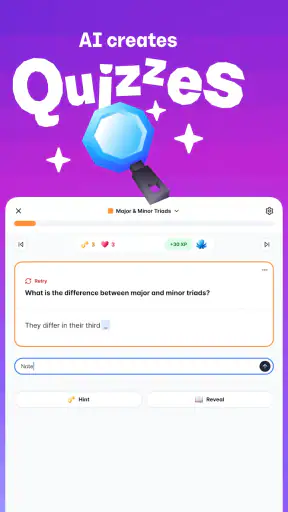
I approached Gizmo: AI Flashcards and Tutor as a study companion rather than another app to open once and forget. It belongs to the Education category, comes from Save All, and combines flashcard creation with an AI tutor. That combination sounds simple, but it changes how I planned study sessions: instead of preparing every card in advance, I could start with a topic, turn material into prompts, and then use questions to expose what I actually understood.
The most important part of my experience was the role of connectivity. Gizmo feels most useful when it can respond quickly, generate or organize study material, and keep a conversation moving. That makes a reliable connection a meaningful part of the experience, especially when I was using the tutor or building a new deck. It is not just a static collection of cards where every action feels self-contained. The app works best when I treat it as an active learning tool and use it in situations where my phone can communicate smoothly with its online services.
How Gizmo fits into real study routines
The app is free to install and is marked for Everyone, so it is easy to consider for school revision, language practice, professional exams, or casual learning. Its current version is 3.2.44 and it requires Android 8.0 or later. Those details make it accessible to many existing Android phones, although the actual comfort of using an AI study tool will still depend on the device, screen size, typing experience, and connection available at the time.
Its popularity is easy to understand: Gizmo has passed 1 million installs, with an average rating of 4.8 from around 122 thousand ratings. I would not treat those figures as a guarantee that it will suit every learner, but they do suggest that the basic idea has found a substantial audience. The developer is Save All, and the app presents itself as a way to make flashcards with AI while also offering a personal AI tutor.
What I like about this setup is that it reduces the distance between “I need to study this” and “I have something I can practise.” Traditional flashcard apps often ask me to create every question and answer manually. That can be valuable because writing cards forces me to process the material, but it can also become a form of procrastination. Gizmo is more convenient when I have notes, a subject, or a broad revision goal and want to move quickly into active recall.
The trade-off is that convenience makes checking the cards more important. An AI-generated card can be neatly written and still focus on the wrong detail, oversimplify a difficult idea, or phrase an answer in a way that does not match what my course expects. I would use the generated material as a starting point, not as an unquestionable textbook. The best results came when I reviewed a new deck before relying on it for serious preparation.
Where the network changes the experience
Connectivity matters most at the moments when Gizmo has to do more than display material already on the screen. Asking the AI tutor a follow-up question, creating study content from a prompt, or expecting a quick response all involve waiting if the connection is weak. In a strong network environment, those moments feel natural. In a crowded station, a basement classroom, or a moving vehicle with an unstable signal, the same workflow can become stop-and-start.
I found it useful to separate two kinds of study sessions. The first is a prepared review session, where I already know which cards I want to practise. The second is an exploratory session, where I want the tutor to explain a concept, generate material, or help me decide what to study next. The first type is easier to fit into unpredictable mobile conditions. The second benefits much more from dependable connectivity, because each new request can depend on a response from the service.
This distinction helps avoid a common frustration. If I open the app during a short break and immediately ask it to create a complete study set while standing somewhere with poor reception, I may spend most of the break waiting. If I prepare the material earlier, I can use the same short break for recall practice instead. Gizmo is therefore strongest when I plan the connection-heavy work and reserve quick moments for focused review.
The tutor also changes my expectations. A normal flashcard app gives me a fixed question and answer. An AI tutor invites a conversation, which is more flexible but also more dependent on timely responses. When the exchange is smooth, I can ask for another explanation or test myself from a different angle. When the connection falters, the conversational flow breaks more noticeably than it would in a conventional deck.
Using it on a phone instead of at a desk
Gizmo makes sense for mobile study because flashcards fit naturally into small spaces of time. I could imagine using it before an appointment, during a lunch break, or after finishing a chapter while the main idea is still fresh. The phone format encourages short sessions rather than a single long block, which suits memory practice better than repeatedly rereading notes for an hour.
There is a practical limitation, though: typing detailed prompts on a phone is slower than working on a computer. If I want to describe a complicated syllabus, paste a long passage, or correct several cards, the small keyboard and limited screen can make the setup feel less comfortable. I would rather do the careful organization when I have time and use the phone for answering, checking, and asking targeted questions.
A useful mobile workflow is to begin with one narrow subject instead of trying to build an entire course at once. For example, I might focus on a single biology process, a set of vocabulary terms, or one section of a certification guide. Narrow prompts make it easier to inspect the results and reduce the chance that a large deck becomes a vague mixture of unrelated facts. They also make a weak connection less painful because the task is smaller and easier to resume.
Another advantage of mobile access is that it lowers the effort required to return to a topic. I do not need to find a notebook, open a full study website, or recreate the context from memory. That convenience is valuable for learners who struggle more with starting than with the actual recall exercise. At the same time, the phone brings distractions, notifications, and the temptation to switch apps. Gizmo can support a routine, but it cannot create concentration by itself.
What happens when a request fails
AI features are most noticeable when something goes wrong. A delayed response, interrupted request, or temporary loss of connectivity can make the app feel less predictable than a deck that is entirely stored and fixed. I would not begin an important last-minute revision session by depending on several new tutor questions. That is the kind of situation where a failure has a real cost, because the learner may lose time and momentum.
My preferred recovery method is simple: save the important study direction in my own notes, keep the topic specific, and retry with a smaller request rather than repeatedly sending the same broad instruction. If a large generation attempt stalls, dividing the material into individual concepts is more manageable. It also produces cards that are easier to inspect, which is educationally better even when the connection is perfect.
There is a second kind of failure that has nothing to do with the network: a response can be available but not useful. An AI tutor may answer a question in a way that sounds confident without addressing the exact confusion. In that case, I would rephrase the question, provide the level I need, or ask for an example. If the subject is medically, legally, or technically sensitive, I would verify important explanations against trusted course material instead of treating the tutor as the final authority.
That is one reason I prefer using Gizmo alongside my original notes. The app can help me turn passive material into questions, but my notes remain the reference point for definitions, required wording, and details that an automated explanation might compress. This approach also makes recovery easier: if the app is unavailable for a moment, I still know what I was studying and can continue reviewing independently.
When a card seems wrong, I would correct or remove it rather than memorizing it simply because it appeared in a generated deck. This is a non-obvious but important part of using an AI flashcard maker responsibly. The speed of creation is useful only if I spend enough time checking the output. A smaller, accurate deck is more valuable than a large collection that mixes precise facts with ambiguous prompts.
Keeping mobile study sensible with data
Because the most interactive parts of Gizmo involve communication with online services, I would be selective about when I use them over mobile data. Creating a deck or holding a longer tutor exchange is better suited to a stable connection, while a short review session is easier to fit into a limited data plan. I would also avoid repeatedly regenerating material just to see slightly different wording. That habit adds little learning value and makes the process less efficient.
A data-conscious routine starts with preparation. I would choose the exact chapter or skill, decide what I want the cards to test, and write a focused request before sending it. The clearer the task, the less likely I am to keep asking for revisions. For language study, that might mean specifying whether I want definitions, example sentences, or translation practice. For a factual subject, I might ask for concise questions that distinguish similar concepts. Clear instructions reduce unnecessary back-and-forth.
I would also treat the tutor as a tool for resolving specific obstacles, not as a replacement for every form of study. If I already understand a card, there is no reason to ask for a long explanation. If I am confused about one term, a focused question is more useful than requesting a complete lesson. This keeps the experience quicker and makes the AI element feel purposeful rather than decorative.
There is a financial point to consider as well. The app is free, but in-app purchases range from $4.99 to $155.22 per item. That wide range means I would inspect the purchase screen carefully before committing to anything, especially if I only need basic flashcard practice. A free entry point is appealing, but the value of an optional purchase depends on how often I use the tutor and whether its extra capabilities solve a real problem in my routine.
I would not recommend paying simply because the app feels promising during the first session. A better test is to use the free experience long enough to see whether I actually return, whether the generated cards match my subjects, and whether the tutor helps me overcome gaps rather than encouraging passive reading. Learners with a strict budget should be comfortable treating the free option as the starting point and deciding later.
Who benefits most from this approach
Gizmo is a strong fit for someone who knows that active recall works but rarely has the patience to build a complete deck manually. It is also useful for learners moving between several subjects, because the AI-assisted creation process can shorten the setup time. Students revising terminology, language learners, and people preparing for knowledge-heavy assessments are likely to appreciate the combination of cards and conversational help.
The app is particularly practical for a person with an irregular schedule. Imagine a commuter who studies at home in the evening, creates a focused set while connected to a dependable network, and then uses short phone sessions to test recall the next day. If a tutor explanation is needed, it can be requested during a stable connection rather than during the busiest part of the commute. That division makes the mobile experience more reliable and prevents every study session from depending on perfect reception.
I also see value for learners who need to turn messy material into a starting structure. Someone with scattered notes may find it easier to begin with AI-assisted cards than with a blank page. The important habit is to refine the result: remove duplicates, fix unclear wording, and add the details that matter for the particular course or exam. Gizmo reduces the initial barrier, but personal editing is what makes the deck truly relevant.
On the other hand, I would be cautious if I wanted a completely offline-first experience, a highly specialized spaced-repetition system with extensive manual controls, or a distraction-free paper-like workflow. A traditional flashcard app may be better for someone who wants total control over every card and does not need an AI conversation. A notebook may be better for a learner who remembers more effectively by writing and drawing. Gizmo’s advantage is speed and flexibility, not universal superiority.
It may also be a poor choice for someone who accepts generated explanations without checking them. The easier the app makes content creation, the easier it is to skip verification. Learners studying subjects where precision matters should compare important cards with their textbook, instructor material, or another trusted reference. The app can accelerate practice, but it should not become the only source of truth.
How it compares with ordinary alternatives
Compared with making paper cards, Gizmo is faster to expand and easier to carry between locations. Paper has the advantage of being independent of battery life, signal, and online responses, while the app offers a more adaptable route from topic to practice. I would choose paper for a quiet, dependable revision session and Gizmo when I need portability or help getting started.
Compared with a conventional digital flashcard tool, the AI tutor is the defining difference. A standard app may feel more predictable because its content and controls are fixed. Gizmo feels more helpful when I do not know how to phrase a question or when a simple card is not enough to explain a misunderstanding. The cost of that flexibility is that I need to judge the quality of the generated material and accept that network conditions can affect interactive moments.
Compared with watching educational videos, flashcards demand more active participation. A video can introduce a concept clearly, but it is easy to confuse recognition with recall. Gizmo is better used after learning the material, when I want to discover whether I can retrieve it without visual prompts. I would not use it as my only introduction to a difficult subject, but I would use it to turn that introduction into measurable practice.
Compared with a search engine, the tutor offers a more study-oriented exchange, while search gives me broader access to sources and viewpoints. For a quick clarification, Gizmo may feel more direct. For disputed, advanced, or source-sensitive information, I would still prefer checking reliable references. The best role for the app is to help me formulate and practise questions, not to remove the need for judgment.
My verdict on learning with a connection in mind
After using Gizmo as a mobile education app, I see its strongest quality in the bridge it creates between unorganized material and active practice. The AI flashcard maker lowers the effort needed to begin, while the tutor gives me a way to keep working when a card alone does not resolve a problem. That is more useful than a simple collection of static prompts, especially for learners who need momentum.
Its connection-dependent moments deserve realistic expectations. I would prepare important decks when the network is stable, keep prompts focused, and reserve short mobile sessions for reviewing material that is already ready. I would also keep my own notes nearby, check generated cards, and avoid making the app responsible for a last-minute study rescue. Those habits turn connectivity from a source of frustration into a manageable part of the workflow.
The free price makes it approachable, and the Everyone rating broadens its potential audience, but the optional purchases mean I would evaluate my actual usage before spending. I would recommend trying it to students, language learners, and busy adults who want quicker access to personalized recall practice. I would steer someone toward a more traditional alternative if offline certainty, complete manual control, or source-based research matters more than AI-assisted convenience.
My final view is positive but deliberate: Gizmo is most valuable when I use it as a flexible practice partner, not as an automatic authority. With a reliable connection, a clear study goal, and a few minutes spent checking the output, it can make mobile revision feel surprisingly practical. Without those conditions, a simpler offline method may be less exciting but more dependable. That balance is what makes the app worth trying, while also making thoughtful use more important than simply installing it.


